
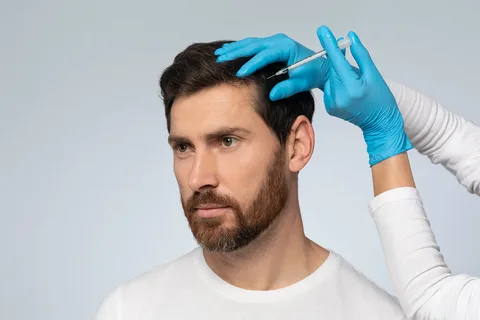
Are you considering a hair transplant in the new year? Why will FUE be the best option? Will the combination of DHI and FUE yield effective results?
Hair transplant technologies have been developing faster than ever in recent years. What was once a discussion limited to FUE and FUT techniques has now expanded to encompass a wide range of options, from microscopic blades to robotic systems, AI-assisted planning to stem cell applications. The year 2026 is seen as heralding a significant turning point, particularly in the field of hair transplantation. Both patient expectations are changing and clinics are turning to methods that provide more comfort and faster recovery. So, which technique will be the star of 2026?
The answer to this question is not limited to just one method; however, some trends are poised to take the lead over others.
İçindekiler
1. Sapphire FUE Gives Way to the “Ultra Micromotor FUE 2.0” Approach
Sapphire FUE, the darling of the last few years, was an important step in enhancing the natural look of hair transplants. Sapphire tips made channel creation easier, accelerated the recovery process, and caused less trauma to the tissue. However, a new transformation began in 2026: Ultra Micromotor FUE 2.0.
This new-generation approach stands out by using devices that operate at much lower temperatures than classic micromotors, affecting the tissue at a minimum level. As a result:
- The donor area is less fatigued
- Graft loss is minimized
- Session duration is shortened
- More grafts can be implanted on the same day
This technique is already beginning to be seen as the standard of the future, especially in countries where naturalness is prioritized in hair transplantation.
2. The Star of 2026: DHI – FUE Combination
It is no longer possible to win the technical competition with a single method alone. Instead, combinations are coming to the fore. Clinics will use the concept of hair transplantation much more in 2026. The most popular approach is:
- DHI for the front area, FUE for the middle and top areas
The reasons for this method’s prominence are very clear:
- DHI provides maximum naturalness in the front line
- FUE is more advantageous for creating density in the crown area
- Planning is easier because each area has different needs
- The recovery process is accelerated
Considering that patients are also turning to “personalized techniques” rather than a single technique, it is no surprise that hybrid transplants will be the star of 2026.
3. Stem Cell-Supported Hair Transplantation Enters the Mainstream in 2026
Stem cell applications have been discussed for some time, but as of 2026, they are becoming standard in most clinics. The procedure in question is not a method that replaces hair transplantation; on the contrary, it is a procedure that supports transplantation. Advantages of stem cell-supported transplantation:
- Faster healing of the donor area
- Increased graft survival rate
- A milder shock loss process
- Hair growing back with a thicker strand structure
This method offers significant advantages, especially for individuals with a weak donor area. It will undoubtedly be the most sought-after “supportive procedure” in 2026.
4. AI-Powered Hair Transplant Planning: The Silent Revolution of 2026
While the technical aspects of hair transplantation are changing, the planning process is undergoing an even greater transformation. By 2026, a significant portion of clinics will begin using AI-based analysis software. Thanks to this software:
- The individual’s hairline is automatically calculated based on facial proportions
- The density of donor hair is scanned by the software
- The optimal number of grafts is determined based on the results
- Before-and-after simulations become more realistic
Artificial intelligence does not perform the actual transplant; however, it significantly reduces the margin of error during the planning stage. This leads to more natural and successful results. Although this technology will be talked about and discussed more in 2026, its implementation will likely take time.
Why is FUE Still the Best Option?
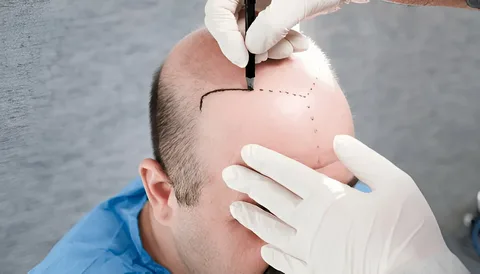
A revolutionary hair transplant technique, FUE involves removing hair follicles one by one from the scalp using micro-punch tools. This meticulous process ensures precise graft extraction while minimizing scalp damage. This also enables faster healing.
The circular incisions used for follicular extraction are less than 1 mm in diameter and heal quickly, leaving nearly invisible micro-scars. Compared to FUT, FUE offers a faster and less painful recovery process and a quicker return to normal activities.
The Beginning of a New Era for Hair Transplantation in 2026
The technique that will stand out in 2026 is not a single method; it is a new approach to hair transplantation that combines techniques and is tailored to the individual. Ultra Micromotor FUE 2.0, hybrid DHI–FUE approaches, stem cell-supported procedures, and artificial intelligence analysis will make hair transplantation more successful, more natural, and much faster in 2026.
Despite all these innovations, FUE remains the technique that delivers the best results. In the hands of Dr. MFO and his team, hair transplants performed with this technique exceed your expectations.
Hairtrans.com was founded by world-famous plastic surgeon Dr. MFO, who is an expert in facial feminization or facial masculinization surgeries, and is managed under his leadership. Would you like to have a hair transplant under the coordination of a plastic surgeon with many years of experience?
Whether you are a trans woman or a natural born male or female, if you are looking for the best hair transplant, contact us now.

 English
  German
  Arabic
  Spanish
  French
  Dutch
Dutch  Italian
  Russian