

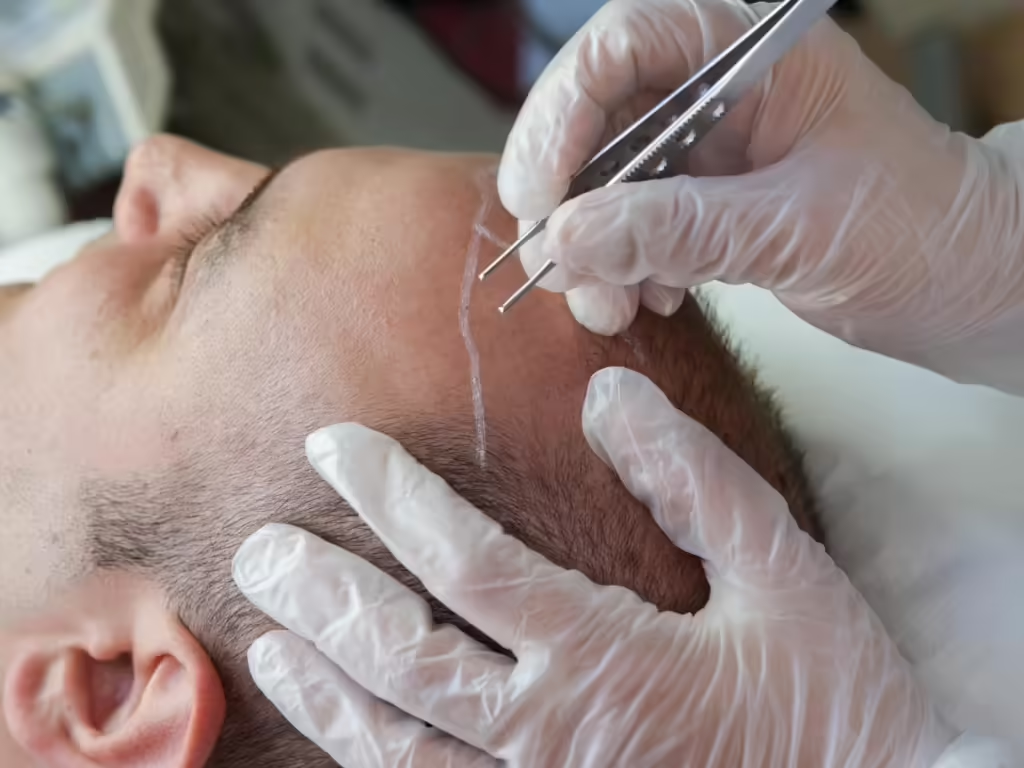
When considering a hair transplant method, many people find themselves overwhelmed by the various methods available. This is especially true for transgender individuals who may be looking to align their appearance with their gender identity. Understanding the different options can help you make an informed decision tailored to your unique needs. Below, we’ll explore the most common hair transplant techniques without endorsing a single method—because the best choice depends on your individual goals, hair type, and overall health.
İçindekiler
1. Follicular Unit Extraction (FUE)
Overview: Follicular Unit Extraction (FUE) is one of the most popular hair transplant methods due to its minimally invasive nature. During FUE, individual hair follicles are extracted from a donor area (usually the back of the head) and implanted into the balding or thinning area.
Pros:
- Minimal Scarring: FUE leaves tiny, barely visible scars, making it a good option for those who prefer short hairstyles.
- Quick Recovery: The recovery time is generally faster compared to other methods, allowing you to return to normal activities sooner.
- Less Painful: Most patients report minimal discomfort during and after the procedure.
Cons:
- Time-Consuming: Since follicles are extracted one by one, the procedure can take several hours, especially if a large area needs to be covered.
- Cost: FUE tends to be more expensive due to the time and precision required.
2. Follicular Unit Transplantation (FUT)
Overview: Follicular Unit Transplantation (FUT), also known as the strip hair transplant method, involves removing a strip of scalp from the donor area, from which individual follicular units are dissected and implanted into the balding area.
Pros:
- Higher Yield: FUT typically provides a higher number of grafts in a single session, making it ideal for those with extensive hair loss.
- Cost-Effective: Since more grafts can be harvested at once, FUT is generally more cost-effective than FUE.
Cons:
- Visible Scarring: FUT leaves a linear scar on the donor area, which might be a concern for those who prefer shorter haircuts.
- Longer Recovery Time: The healing process for FUT is typically longer, with more post-operative discomfort compared to FUE.
3. Direct Hair Implantation (DHI)
Overview: Direct Hair Implantation (DHI) is a variation of the FUE technique but with an added level of precision. DHI uses a specialized tool that allows for simultaneous extraction and implantation of hair follicles.
Pros:
- Higher Precision: The use of specialized tools allows for more accurate implantation, which can result in a more natural hairline.
- Less Handling of Grafts: Since the grafts are implanted directly, there’s less time they spend outside the body, which may improve survival rates.
Cons:
- High Cost: DHI is often more expensive due to the specialized tools and expertise required.
- Limited Availability: Not all clinics offer DHI, so you might have to travel to find a qualified provider.
4. Robotic Hair Transplantation
Overview: Robotic Hair Transplant Method is an advanced version of FUE, where a robotic system assists in the extraction and implantation of hair follicles. This method is highly technical and relies on artificial intelligence to improve accuracy.
Pros:
- Precision: The robotic system can identify and extract the healthiest follicles, potentially increasing the success rate.
- Efficiency: The robot can work more quickly and efficiently than a human, reducing the time required for the procedure.
Cons:
- Cost: The advanced technology comes with a higher price tag.
- Availability: As with DHI, robotic hair transplantation is not available everywhere.
5. Platelet-Rich Plasma (PRP) Therapy
Overview: Although not a hair transplant method per se, Platelet-Rich Plasma (PRP) therapy is often used in conjunction with other procedures. PRP involves injecting your own platelets into the scalp to promote healing and hair growth.
Pros:
- Boosts Results: PRP can enhance the results of other hair transplant methods by accelerating healing and stimulating growth.
- Minimally Invasive: The procedure is quick and involves minimal discomfort.
Cons:
- Not a Standalone Solution: PRP is usually used to complement other treatments, so it may not be sufficient on its own.
- Multiple Sessions Required: For best results, multiple sessions may be necessary.
What’s the Best Hair Transplant Method?
Choosing the right hair transplant method is a deeply personal decision that should be made in consultation with a qualified specialist. Whether you’re undergoing gender transition or simply want to restore your hair, the method you choose will depend on various factors, including your budget, hair type, and desired outcome.
 English
  German
  Arabic
  Spanish
  French
  Dutch
Dutch  Italian
  Russian