


Hair transplantation not only solves baldness but also improves the hairline with hairline design, which can be damaged and negatively affect facial aesthetics. So how can women benefit from this effect of hair transplantation?
When it comes to facial aesthetics for women, the focus is often on details such as the eyes, nose, or lips. However, one of the most critical elements that determine the overall expression of a woman’s face is the hairline. At this point, the position, shape, and density of the hairline play a direct role in making the face appear softer, more balanced, and more feminine. Therefore, in hair transplant planning, it is crucial not only to increase hair density but also to create the right hairline design.
Hairline design specific to women involves an aesthetic planning process that focuses on facial proportions, unlike the classic approach to hair transplantation.
İçindekiler
How Does the Hairline Affect Facial Expression?
The hairline, along with the width of the forehead, defines the upper third of the face. Excessive width in this area causes the face to appear longer and harsher in women, resulting in a masculine appearance. Receding temples or a hairline positioned too far back particularly contribute to this effect.
The ideal hairline for women is generally:
- Slightly rounded
- Full at the temples
- Free of sharp corners
- With a natural transition
A hairline with these characteristics softens the overall expression of the face and helps achieve a more feminine look.
How is Hairline Design Planned for Women?
The most important stage in hair transplant procedures for women is the personalized hairline design. During this planning process, factors such as:
- Forehead height
- Face shape
- Eyebrow position
- Temple structure
- Natural hair growth direction
are analyzed in detail. The purpose of this detailed planning is to create a frame that complements the face and supports feminine features. For example, a very straight hairline can create an artificial look on a woman’s face, while an overly rounded line can detract from a natural appearance. Therefore, the hairline must be planned with great precision.
Can Hair Transplantation Achieve a Feminine Appearance?
Although hair transplantation is often associated with men, women and transgender women can also benefit from hair transplantation procedures today. At this point, hair transplantation aims not only to increase hair density but also to improve the overall aesthetic perception of the face. With a properly planned hairline designRecovery Process and Results:
- The width of the forehead is balanced.
- Temple gaps are closed.
- The face gains a more oval shape.
- The upper face area appears softer.
- Profile aesthetics are supported.
These effects are the most important determinants of hair transplantation, especially for those who want to achieve feminine facial features. Especially in women with a wide forehead, moving the hairline forward by just a few millimeters can create a noticeable change in facial proportions.
Recovery Process and Results
In women, it is normal for the transplanted hair follicles to fall out within the first few weeks after hair transplantation. This is temporary, and new hair growth is observed starting around the 3rd month. At this point, it is very important to follow the hair transplant specialist’s recommendations.
The hairline usually reaches its final form between 6 and 12 months. During this process, the hair enters its natural growth cycle and begins to form a frame that complements the face. After a productive recovery process, women will regain their confidence as they see the initial results and positive changes in their hairline.
Which Technique Should Be Preferred in Women’s Hairline Design?
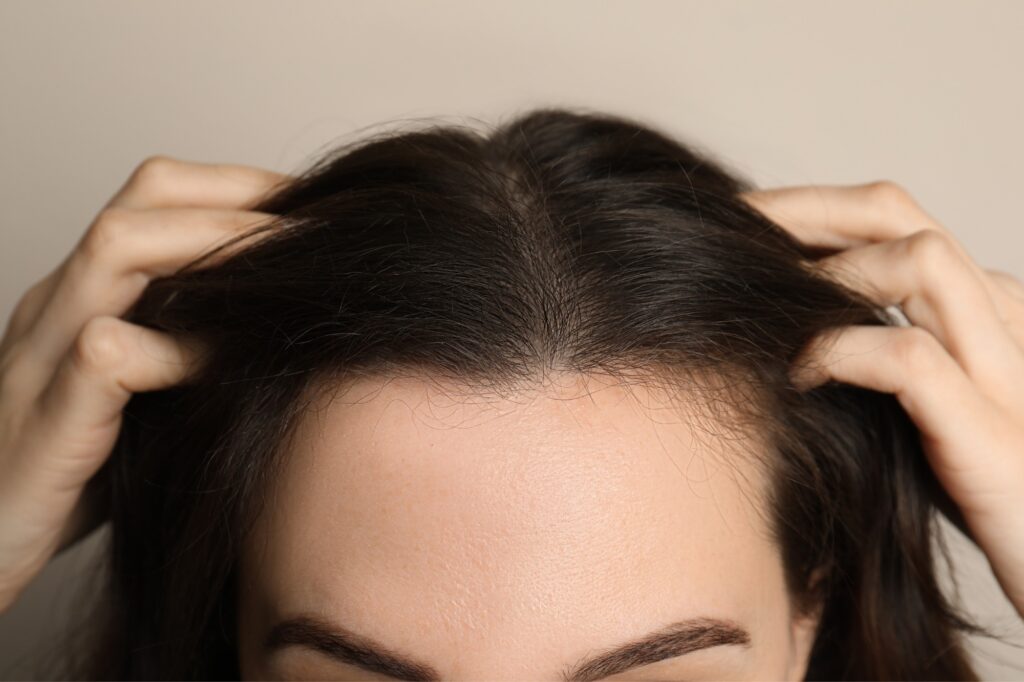
When it comes to hairline design for women, the technique used is just as important as the design itself. This is because the female hairline consists of softer transitions and irregular natural breaks, rather than sharp, straight lines like those seen in men. Therefore, the method chosen for transplantation must allow for precision work that can mimic this natural look.
Today, one of the most frequently used methods for a female hairline design is the FUE technique. This technique allows for the individual and controlled placement of hair follicles taken from the donor area, enabling millimeter-precise planning, especially on the front hairline. Furthermore, the ability to transplant without damaging existing hair provides a significant advantage in cases of thinning, which is common in female patients.
Grafts placed at the correct angle and density prevent an artificial appearance that may be noticeable later. At this point, planning the hairline to suit the facial features plays a critical role, as much as the technique itself. In short, achieving a successful result in female hair transplantation is possible through the combination of the right technique selection and an aesthetic perspective.
Hairtrans.com was founded by world-famous plastic surgeon Dr. MFO, who is an expert in facial feminization or facial masculinization surgeries, and is managed under his leadership. Would you like to have a hair transplant under the coordination of a plastic surgeon with many years of experience?

 English
  German
  Arabic
  Spanish
  French
  Dutch
Dutch  Italian
  Russian