Hair Transplant Clinic by Dr. MFO

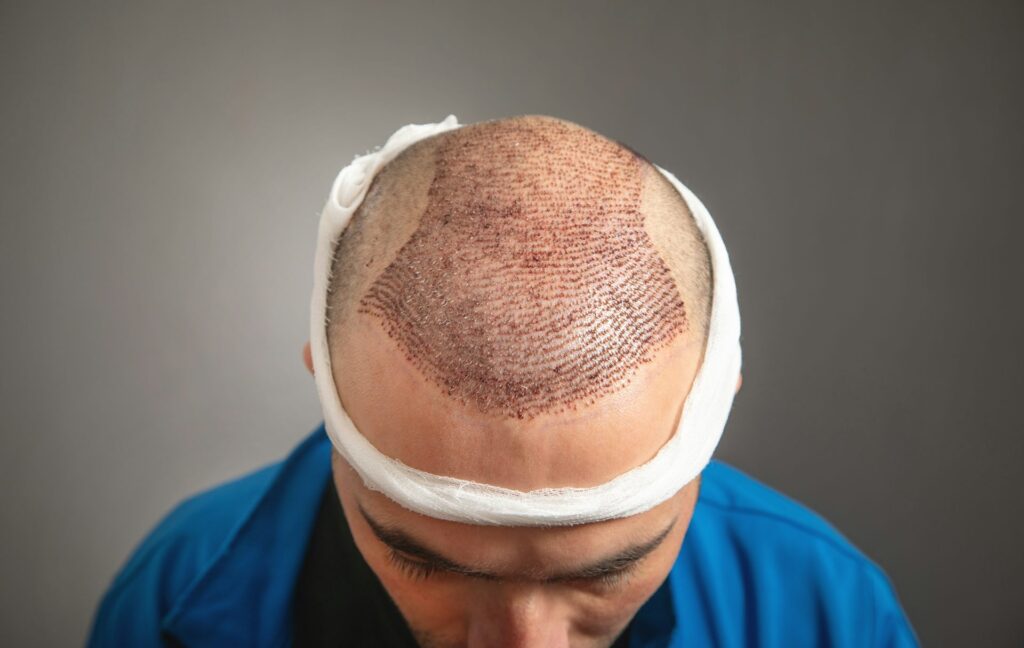
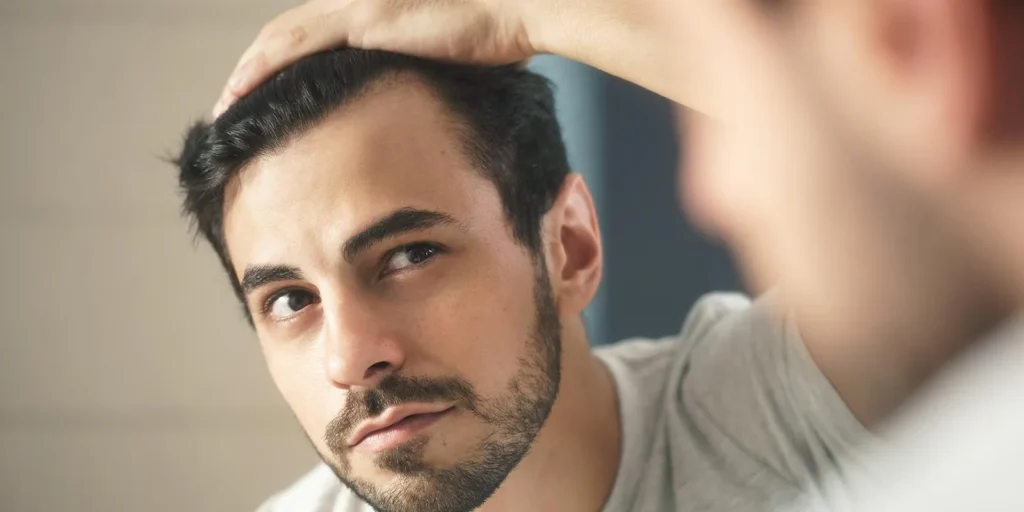
This image features a hyperrealistic close-up portrait of a male individual, meticulously captured to highlight both technical and aesthetic details. **Camera and Optics:** The photograph appears to be taken with a high-resolution lens, likely an 85mm macro lens, known for its ability to capture fine details and create a shallow depth of field. The image quality is exceptionally sharp, suggesting it may have been shot in 8K resolution, providing a hyperrealistic and almost three-dimensional effect. The focus is razor-sharp, emphasizing the subject’s facial features while softly blurring the background. **Lighting Design:** The lighting in this image is characterized by a hard-light technique, creating distinct and dramatic shadows. The light source seems to be positioned at a side angle, accentuating the contours of the face and adding depth to the features. This lighting approach enhances the texture of the skin and hair, contributing to a sculpted and chiseled appearance. The shadows under the cheekbones and jawline create a sense of dimension and intensity. **Anatomy and Identity:** The subject is male, with a prominent and well-defined facial structure. His posture is relaxed yet confident, with a slight tilt of the head that adds a contemplative or introspective mood. The facial features include a strong jawline, high cheekbones, and a well-groomed beard, contributing to a masculine and refined aesthetic. **Texture and Skin:** The skin texture is a focal point of this image, with visible pores, fine lines, and a natural sheen that suggests a slightly moist or hydrated complexion. The hyperrealistic quality of the image captures the luminescence of the skin, where light reflects subtly off the surface, adding a lifelike glow. There are no visible droplets of sweat, but the skin appears smooth and well-maintained. **Clothing and Accessories:** The subject is wearing a simple, light-colored shirt made of a soft fabric, possibly cotton or a cotton blend. The shirt is plain, without any visible metal accessories or hardware, keeping the focus entirely on the subject’s face and expression. **Composition and Background:** The composition of the image is tightly framed, centering on the subject’s face and upper shoulders. The background is blurred, creating a bokeh effect that isolates the subject and draws the viewer’s attention directly to him. The atmosphere of the image is intimate and introspective, with a clean and minimalist aesthetic that avoids distractions. The overall mood is one of quiet confidence and sophistication, evoking a sense of personal reflection or preparation.

The Biggest Secret to an Ideal Hairline: Proper Hair Transplant Planning

Did you know that the most important stage in hair transplantation is planning the procedure? So, how should hair transplantation planning be done when it comes to the hairline? Do you want to improve the appearance of your hairline? Hair transplantation is no longer just a procedure to stop balding; it has become an art […]

The Biggest Secret to an Ideal Hairline: Proper Hair Transplant Planning Read More »
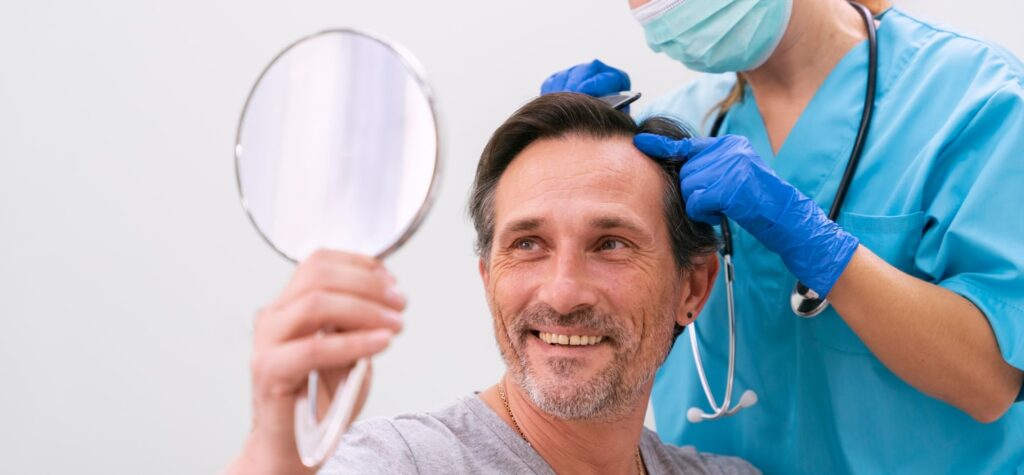
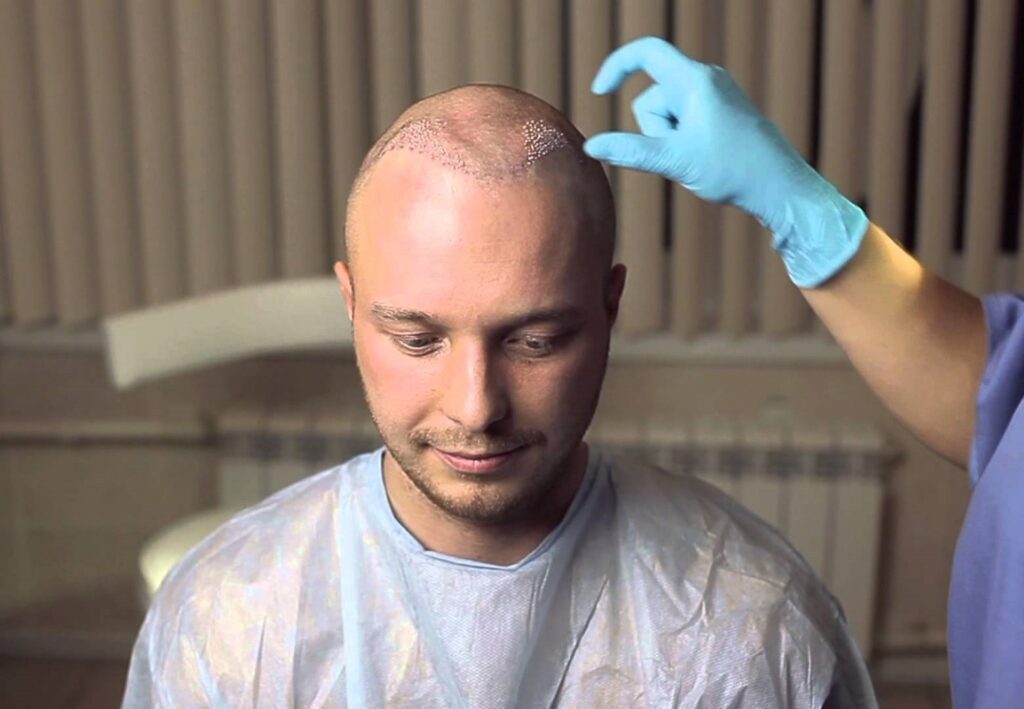
A meticulously crafted editorial description of the image featuring a middle-aged male patient undergoing a hair examination procedure: The image is captured with a high-resolution optical setup, likely utilizing an **85mm macro lens** to emphasize fine details and textures. The **hyperrealistic quality** of the image suggests it may have been shot in **8K resolution**, ensuring every nuance of the scene is vividly rendered. The depth of field is shallow, creating a soft bokeh effect that isolates the subject from the background, enhancing the focus on the patient and the medical professional. The **lighting design** employs a **hard-light technique**, casting sharp and defined shadows. The light source appears to be positioned at a **side angle**, creating a **dramatic contrast** between the illuminated and shadowed areas of the subject’s face and body. This technique accentuates the contours of the patient’s facial structure, particularly the cheekbones, jawline, and forehead, lending a sculptural quality to the composition. The **subject** is a middle-aged male with a relaxed yet engaged demeanor. His posture is upright and slightly tilted forward, suggesting attentiveness and cooperation during the procedure. His facial features are distinctly masculine, with a well-defined jawline and expressive eyes. The medical professional, dressed in **teal scrubs**, is positioned behind him, wearing **blue latex gloves** and a **surgical mask**, indicating a clinical environment. The **texture and skin** of the patient are rendered with remarkable clarity. The skin exhibits a natural **luminescence**, with subtle reflections of light highlighting its surface. There is a slight sheen, possibly indicating the presence of **moisture or a topical solution** applied during the procedure. The pores and fine lines on the skin are visible, adding to the hyperrealistic quality of the image. The **clothing and equipment** in the image are functional and clinical. The patient wears a simple, **lightweight gray shirt**, likely made of cotton or a cotton blend, providing comfort and ease of movement. The medical professional’s attire consists of **teal scrubs**, a common choice in medical settings for their practicality and hygiene. The **stethoscope** draped around her neck and the **blue latex gloves** she wears are indicative of her role and the sterile nature of the environment. The **composition and background** are designed to draw attention to the subject and the procedure. The **focus is sharply on the patient’s face and the mirror he holds**, which reflects part of the procedure. The background is intentionally blurred, creating a **neutral and unobtrusive atmosphere** that ensures the viewer’s attention remains on the subject. The overall mood of the image is **clinical yet reassuring**, blending professionalism with a sense of care and precision.

FUE or DHI: Which is Better? Who Will Win the Showdown in 2025?

Are you struggling with hair loss? Which hair transplant technique will help you overcome this issue? FUE or DHI? Which technique is most suitable for you? Does the most suitable technique vary from person to person? Hair loss is an unwanted process for most people, both physically, emotionally, and psychologically. That’s why deciding to undergo

FUE or DHI: Which is Better? Who Will Win the Showdown in 2025? Read More »

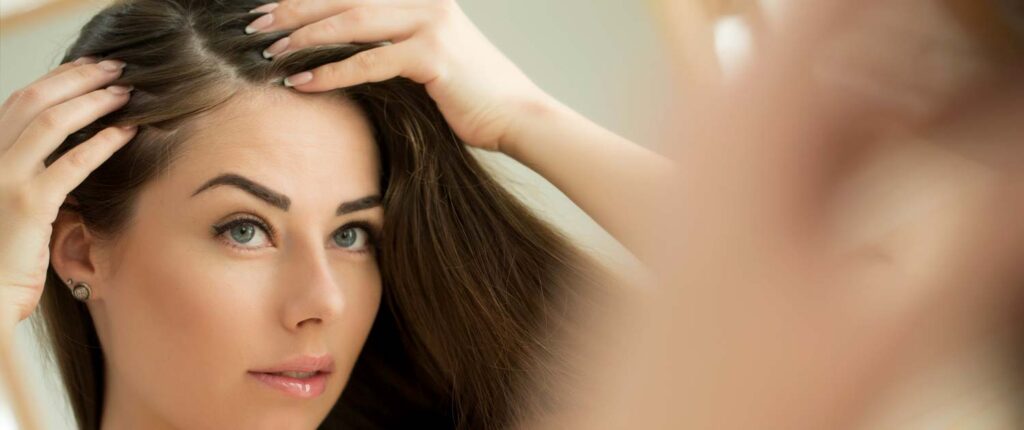
A hyper-realistic, 8k editorial close-up captured with an 85mm macro lens, focusing on a woman meticulously examining her hairline. The composition employs a soft, diffused studio lighting setup that elegantly accentuates her facial structure and the natural luster of her skin. The woman, with a serene and composed expression, gently lifts her chestnut-brown hair, highlighting the delicate transition at the scalp. Her complexion is clear and radiant, possessing a subtle luminescence that reflects the soft ambient light. She is accessorized with a minimalist, polished metal stud earring, adding a touch of understated sophistication. The depth of field is shallow, creating a soft-focus foreground that draws the viewer's eye directly to her attentive, calm gaze and the precise grooming of her brows, conveying a clinical yet aesthetic atmosphere of self-care and professional restoration.

Trans Women’s Hair Transplant Guide: Will Hormone Therapy Harm?

Hair transplant and HRT: Friends or Foes? One of the most important areas of change for trans women undergoing feminine transformation is the hairline. A feminine forehead line is not only an aesthetic preference but also an important step toward achieving mental and physical well-being. Managing this step correctly through both hormone therapy (HRT) and

Trans Women’s Hair Transplant Guide: Will Hormone Therapy Harm? Read More »

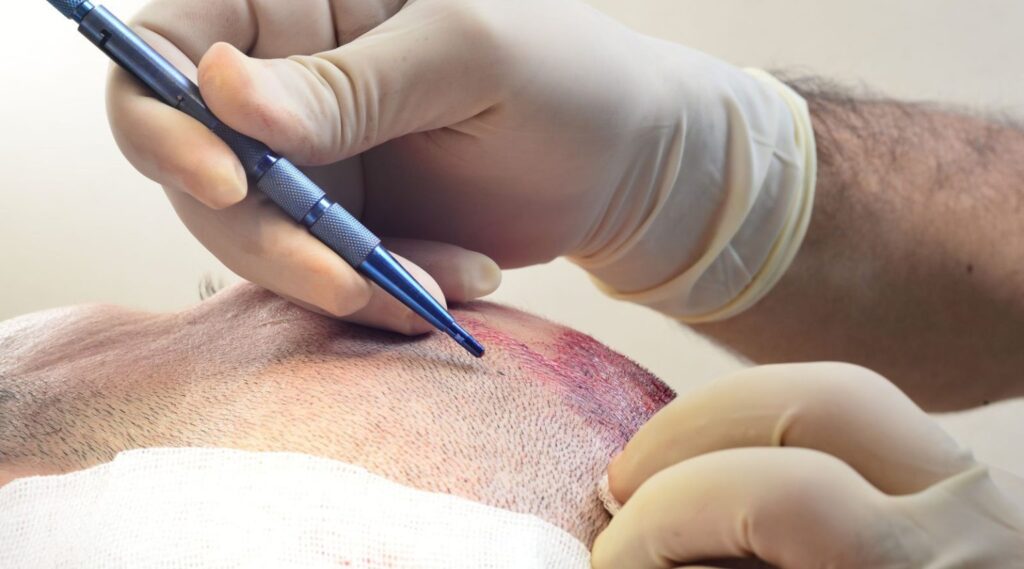
A hyper-realistic, 8k macro close-up shot captured with a 100mm macro lens, focusing on a precise medical hair transplant procedure. The lighting is clinical and bright, highlighting the intricate texture of the patient's scalp and the surgical precision of the implanter pen. The practitioner, wearing sterile, thin beige nitrile gloves, holds a textured, metallic blue Choi implanter pen with surgical focus. The patient's scalp shows micro-punctures and subtle, naturalistic traces of the procedure, with fine, emerging stubble depicted in crisp detail. The composition centers on the interaction between the metal tool and the skin, emphasizing sterility and technical accuracy. The background is softly blurred in a neutral, clinical tone, maintaining an atmosphere of professional, high-end medical aesthetic refinement.

Is It Possible to Make Hair Transplant Results more Permanent? Here are the 5 Steps

Hair transplant is an extremely effective solution, both aesthetically and psychologically, especially for those experiencing genetic hair loss. However, while many people expect lifelong results after undergoing hair transplantation, certain mistakes and oversights can negatively impact the outcomes. Here’s an important fact to keep in mind: Hair transplantation doesn’t end with the procedure itself; the

Is It Possible to Make Hair Transplant Results more Permanent? Here are the 5 Steps Read More »

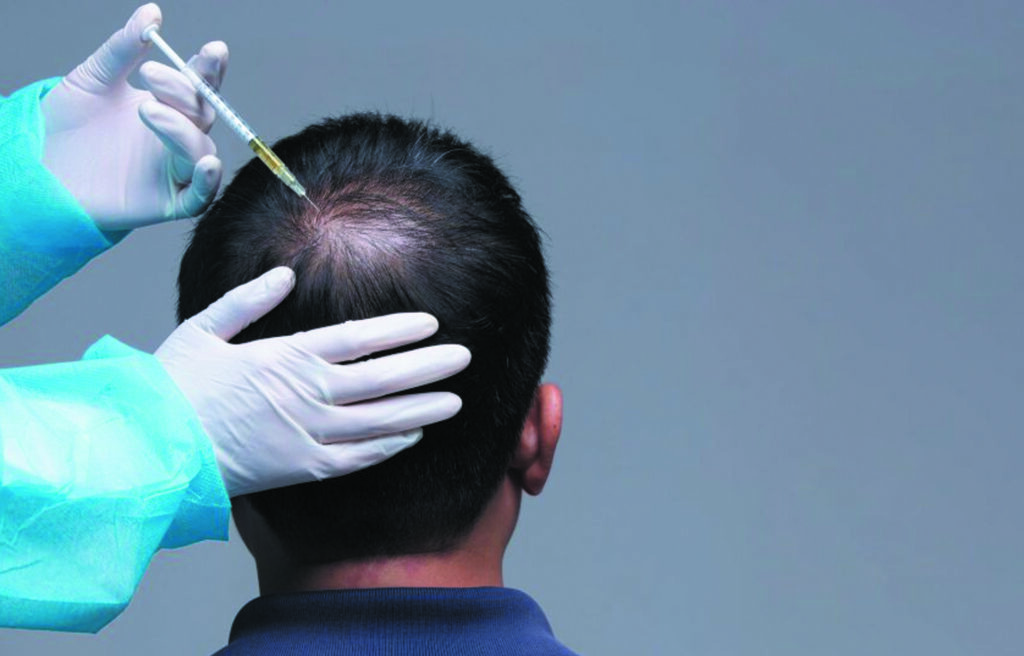
A clinical, high-resolution editorial shot captured with an 85mm macro lens, showcasing a PRP hair treatment. The image exhibits hyper-realistic 8K clarity, focusing on the precision of a practitioner’s hands—clad in sterile, textured white latex gloves and blue surgical scrubs—carefully administering a golden serum via a fine-gauge syringe into the scalp of a male subject. The lighting is clinical and diffused, minimizing harsh shadows to maintain a sterile, professional atmosphere. The focus is razor-sharp on the junction where the needle meets the scalp, highlighting the texture of the hair follicles and the skin’s surface. The subject is captured from a rear, mid-shot angle, emphasizing the clinical procedure, set against a neutral, seamless grey background that reinforces a clean, medical-grade aesthetic.

Is FUE More Painful, or Is It DHI? Understanding The Difference in 5 Steps

If you are torn between FUE and DHI and the most decisive factor for you is the level of pain, you are in the right place. Many people dealing with hair loss begin to thoroughly evaluate hair transplantation procedures while seeking natural and permanent solutions. However, alongside the question “which technique is better?” another frequently

Is FUE More Painful, or Is It DHI? Understanding The Difference in 5 Steps Read More »

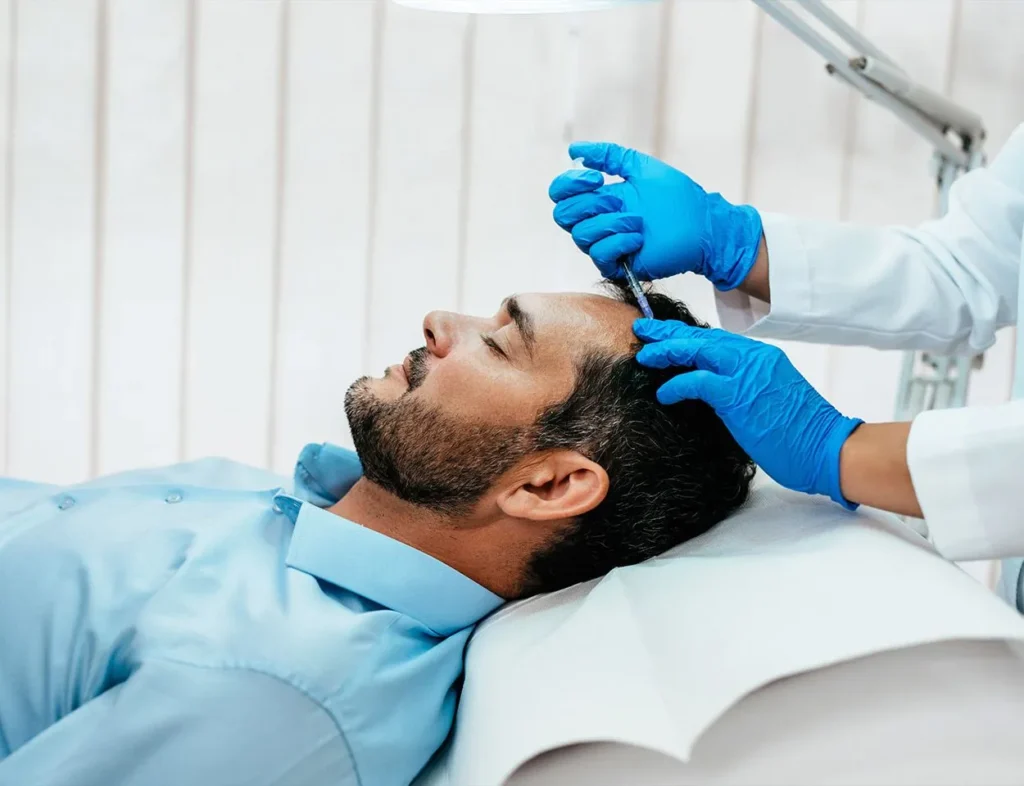
A hyper-realistic, clinical close-up captured with an 85mm macro lens, focusing on a hair restoration procedure. The frame showcases a profile view of a male patient reclining on a medical bed, his expression calm and composed. A professional practitioner, clad in a crisp white medical coat and bright blue nitrile gloves, is shown performing a precise injection into the patient's scalp. The lighting is bright, sterile, and clinical, utilizing soft-box diffusion to eliminate harsh shadows while highlighting the clean, minimalist textures of the medical environment. The patient wears a light blue button-down shirt made of a smooth, breathable cotton-blend fabric. The focus is razor-sharp on the point of contact between the needle and the skin, emphasizing the technical precision and hygienic standards of the treatment, set against a clean, vertical-paneled clinical wall.

Does Hair Transplant Thinning the Donor Area? Are You Right to be Concerned?

One of the most worrying issues about hair transplantation is the possibility of thinning of the donor area. With this concern, many people have the following questions in mind: “Will the transplanted area be beautiful?”, “Will the hair look natural?”, “Will there be pain?”… However, there is one question that usually remains in the background

Does Hair Transplant Thinning the Donor Area? Are You Right to be Concerned? Read More »

en_USEnglish
Scroll to Top